Opinions, Perceptions, and Misconceptions

Devant le miroir
(Before the Mirror)

Édouard Manet (1832-1883)
[Public domain],
via Wikimedia Commons

Jargget Washington

On October 21, 2012, Jargget Washington allegedly tried gnawing off his own wrist, defecated in the back of a police cruiser, and bit off and swallowed his own finger at the Hudson County jail, according to nj.com.

All this unfolded after Washington's failed attempt at an alleged carjacking while naked, according to courierpostonline.com.

Authorities have said Washington was brought twice to Jersey City Medical Center for evaluation before he allegedly swallowed his finger, according to the media.

Press reports also indicate authorities believe the 29-year-old was allegedly under the influence of PCP.

Keith Costill

On October 15, 2012, and again on October 25, 2012, nj.com ran stories about former Deputy Attorney General Keith Costill.

The Pennington resident, according to nj.com, previously plead guilty to a July 2010 incident when his SUV jumped a curb, struck, injured, and killed Hikema George.

As reported by the press, authorities initially charged Costill with vehicular homicide--a second-degree crime with a State Prison sentence between five years and ten years.

The news reported, however, Costill received five years probation last June after pleading to assault by an automobile--a lesser crime with up to 18 months Prison.

A few days after sentencing, according to the press, Hopewell police arrested Costill for alleged public intoxication and 0.14% blood alcohol content (BAC).

On a separate occasion, according to the news, Costill allegedly had a 0.20% BAC.

According to nj.com, Costill plead guilty in 2001 to fourth-degree child abuse and neglect. The news indicated Costill left his 2-year-old twin daughters alone in a locked car and asleep for approximately an hour while he drank at a Cherry Hill hotel.

Opinions, Perceptions, and Misconceptions

Without intending any disrespect, these news items suggest Messrs. Washington and Costill have problems and require help.

Like many people, I read the news. I am familiar with the various reactions stories like these may evoke.

The experience of law abiding individuals as to crime is probably and, to be frank, hopefully limited to the media.

Accordingly, law abiding individuals frequently, and understandably, do not know or comprehend why one would choose to be a criminal defense lawyer. I expect most people will not understand my reasons.

Many, if not all, of the same people also question the morals and ethics of criminal defense lawyers based on this professional choice. Some do this privately, and others openly ask.

None of this offends me because I know who I am.

My profession provides an opportunity to help people. To do this effectively requires seeing a set of facts both the same as most others, and at the same time differently than most others. To do this professionally requires experience and proper analysis.

In academic terms, specific and general deterrence figure prominently among justifications for punishment. And rehabilitation plays an equally significant role. The justice system does not exist only to stop offenders by imposing penalties. It also assists an offender become a productive member of society.

I expect many folks wonder why one, such as me, would choose to help people in the criminal justice system as opposed to those involved in, say, real estate transactions, wills, estates, or any of the myriad areas of legal practice.

Life is unpredictable. We as humans may try to control our lives' circumstances, but this is not always possible. For example, none of us are immune from sickness.

In addition, people can make mistakes. No human is immune because we all possess an unlimited capacity to make errors.

One cannot predict with any degree of accuracy when stressful circumstances will arise, how one may act under those circumstances, the mistakes one may make under those circumstances, or the long term personal impact of them.

Society has decided some mistakes are forgivable, while others may have far reaching legal consequences.

My clients may have made more mistakes than other people. Alternatively, my clients' mistakes may be more significant than those committed by others.

It seems to me, however, that anyone could commit an error that requires the legal assistance I provide.

The Law Office of Michael A. Smolensky LLC does not represent either Jargget Washington or Keith Costill.

Experienced New Jersey Criminal Defense Lawyer Michael Smolensky, Esquire, knows how to protect his clients. Mr. Smolensky can provide consultations for all cases. Call Now—(856) 812-0321.

Law Office of Michael A. Smolensky LLC on the World Wide Web.

Search and Seizure: Warrant Exceptions

The Meeting
Marie Bashkirtseff (1858 - 1884)
[Public domain],
via Wikimedia Commons
On September 13, 2012, Bayonne police charged two men with various drug-related offenses, as reported by nj.com. Press reports indicate a silver four-door BMW allegedly stopped at the corner of 12th Street and Broadway at about 6:15 p.m. Plainclothes detectives allegedly saw the driver, later identified as Andrew Harrison, and a suspect on the corner, later identified as Dino Defino, engage in a hand-to-hand drug transaction, according to nj.com.

After stopping Harrison at the corner of 32nd Street and Avenue E, police searched the thirty-seven year old and his silver BMW, reported nj.com. The police seized an alleged 51 pills of suspected oxycodone, according to nj.com.

Meanwhile police also stopped Defino while walking on 12th Street. A search of the thirty-three year old resulted in the seizure of an alleged bag of vegetation suspected to be marijuana, and suspected oxycodone pills, as reported by nj.com.

Law enforcement authorities filed charges against Harrison for possession of oxycodone and possession with intent to distribute, according to the media.

Defino was charged with possession of marijuana under 50 grams, possession with intent to sell, possession of oxycodone, possession of CDS with intent to distribute, and possession within a 1,000 feet of a school.

New Jersey law presumes a search by police of Constitutionally protected areas without a warrant to be invalid. The remedy for an invalid search is suppression of the evidence. When the facts fall within an exception to the warrant requirement, however, the court allows the state to use the evidence at trial.

Some questions to rule out any exceptions to the warrant requirement might include:
  • What actions did police observe before arresting both men?
  • Where were the police positioned when they observed these things?
  • What direction were the police facing?
  • How far apart were the police and the two men?
  • What other surrounding circumstances were present?
  • Did police obtain a warrant before searching the BMW?
  • How many police stopped Harrison?
  • What circumstances lead up to the search of the BMW?
  • How many police stopped Defino?
  • What else did the police seize as evidence?

Experienced New Jersey Criminal Defense Lawyer Michael Smolensky, Esquire, knows how to protect his clients. Mr. Smolensky can provide consultations on all cases regarding Search and Seizure. Call Now—(856) 812-0321.

Law Office of Michael A. Smolensky LLC on the World Wide Web.

Cocaine Possession With Intent To Distribute, N.J.S.A. 2C:35-5

cocaine, crack cocaine, coke, drugs, blow, snow, yayo, llello, nose candy, powder, white,
Mad Hatter, by Walt Disney
(Original Trailer (1951))
[Public domain],
via Wikimedia Commons
On August 23, 2012, Monroe Township police charged Joseph Pinizzotto, Jr., and Amber Currywith with various crimes, according to nj.com. Among the charges is possession with intent to distribute crack cocaine, according to courierpostonline.com.

Law enforcement officials seized the alleged crack cocaine during the execution of a search warrant at a residence near the 900 block of North Beecham Road in Monroe's Williamstown section, according to news reports.

Press reports indicate authorities lodged Pinizzotto in the Gloucester County Jail on $150,000.00 bail, and released Curry when she posted $2,500.00 bail.

New Jersey law prohibits controlled dangerous substance (CDS) possession with intent to distribute, defined as any person who knowingly or purposely:
  1. manufactures, distributes, or dispenses, or possesses or has under his control with intent to manufacture, distribute or dispense, CDS or CDS analog, or
  2. creates, distributes, or possesses or has under his control with intent to distribute counterfeit CDS.
The degree of crime and penalties for cocaine possession with intent to distribute, based on N.J.S.A. 2C:35-5, depend on the amount of cocaine, including any adulterants or dilutants.

  • FIRST DEGREE CRIME (FELONY)
    • Quantity: Five ounces or more
    • State Prison: Between ten years and twenty years
    • Mandatory minimum: One-half to one-third of sentence
    • Fines: Between $200,000.00 and $500,000.00
    • DEDR Penalty*: $3,000.00

  • SECOND DEGREE CRIME (FELONY)
    • Quantity: One-half ounce but less than five ounces
    • State Prison: Between five years and ten years
    • Fines: Up to $150,000.00
    • DEDR Penalty*: $2,000.00

  • THIRD DEGREE CRIME (FELONY)
    • Quantity: less than one-half ounce
    • State Prison: Between three years and five years
    • Fines: Between $15,000.00 and $75,000.00
    • DEDR Penalty*: $1,000.00

  • ADDITIONAL PENALTIES
    • Drug Court for qualified applicants
    • Victims of Crime Compensation Assessment (VCCA): $50
    • Law Enforcement Officer Training & Equipment Fund: $30
    • Safe Neighborhood Services Fund Assessment: $75
    • Drug Abuse Education Fund: $50
    • Lab Fee: $50
    • Driver's License Suspension: Six months to twenty-four months
    • Court Costs

*DEDR stands for Drug Enforcement Demand Reduction.

Experienced New Jersey Criminal Defense Lawyer Michael Smolensky, Esquire, knows how to protect his clients. Mr. Smolensky can provide consultations on all cases regarding CDS Possession With Intent to Distribute. Call Now—(856) 812-0321.

Shoplifting, N.J.S.A. 2C:20-11

Expulsion from the Garden of Eden
By Elisabeth Keyser (1851 - 1898)
[Public domain],
via Wikimedia Commons
On August 7, 2012, news site nj.com reported the arrest of Lester Williams for Shoplifting.

The Jersey City resident allegedly tried to leave a Bayonne Walmart with two flat-screen televisions in his shopping cart without paying.

Police arrived to find Williams in the custody of store security. The merchandise, according to nj.com, had an alleged value of $556.00.

New Jersey law criminalizes the conduct of any person who purposely takes possession of, carries away, transfers or causes to be carried away or transferred, any merchandise displayed, held, stored or offered for sale by any store or other retail mercantile establishment with the intention of depriving the merchant of the possession, use or benefit of such merchandise or converting the same to the use of such person without paying to the merchant the full retail value thereof.

With some similarities to Theft, Shoplifting is graded as follows:

SECOND DEGREE:
  • Full retail value at least $75,000; or
  • In furtherance of or in conjunction with organized retail theft enterprise and full retail value is $1,000.00 or more
  • Sentencing exposure five to ten years New Jersey State Prison
THIRD DEGREE:
  • Full retail value greater than $500 and less than $75,000; or
  • In furtherance of or in conjunction with organized retail theft enterprise and full retail value is less than $1,000.00
  • Sentencing exposure three to five years New Jersey State Prison
FOURTH DEGREE:
  • Full retail value between $200 and $500, inclusive;
  • Sentencing exposure eighteen months New Jersey State Prison
DISORDERLY PERSON:
  • Full retail value less than $200.
  • Sentencing exposure six months county jail

Experienced New Jersey Criminal Defense Lawyer Michael Smolensky, Esquire, knows how to protect his clients. Mr. Smolensky can provide consultations on any case regarding Shoplifting. Call Now—(856) 812-0321.

Aggravated Assault, N.J.S.A. 2C:12-1(f)

Assault, Simple Assault, Aggravated Assault, N.J.S.A. 2C:12-1, New Jersey
On August 23, 2012, police in Bridgeton, New Jersey, charged April Lacey with Aggravated Assault, according to nj.com.

After allegedly grabbing a Midget Football League cheerleading coach by the hair, press reports indicate Lacey threw her nearly to the ground.

Lacey, as reported by the news site, said the altercation arose out of a verbal argument with the cheerleading coach about league funds.

Witnesses, according to the news, consisted of a group of cheerleaders and parents. Bridgeton Police Chief Mark Ott said Lacey was charged with Aggravated Assault because this took place in front of children, according to nj.com.

N.J.S.A. 2C:12-1(a) provides a person is guilty of Simple Assault if she:
  1. Attempts to cause or purposely, knowingly or recklessly causes bodily injury to another;
  2. Negligently causes bodily injury to another with a deadly weapon; or
  3. Attempts by physical menace to put another in fear of imminent serious bodily injury.
Simple Assault in the presence of a child under 16 at a school or community sponsored youth sports event is guilty of, and strictly liable for, a fourth degree crime. N.J.S.A. 2C:12-1(f).

It is not a defense that defendant did not know the child was present. Similarly, it is not a defense that the defendant reasonably believed that the child was 16 years of age or older. These limitations apply because the Code expressly states this is a strict liability crime.

"School or community sponsored youth sports event" means:
  • competition, practice or instructional event
  • involving one or more interscholastic sports teams or youth sports teams
  • organized pursuant to a nonprofit or similar charter
  • or which are member teams in a youth league
  • organized by or affiliated with a county or municipal recreation department
  • excluding collegiate, semi-professional or professional sporting events.
Experienced New Jersey Criminal Defense Lawyer Michael Smolensky, Esquire, knows how to protect his clients. Mr. Smolensky can provide consultations on all cases regarding Aggravated Assault. Call Now—(856) 812-0321.

Conspiracy, N.J.S.A. 2C:5-2(d) and N.J.S.A. 2C:5-2(e)

Three Monkeys Stealing Fruit
By Frans Snyders (1579-1657)
[Public domain],
via Wikimedia Commons

Conspiracy Conviction

Following a conviction for second degree conspiracy, ex-Newark policeman Darius Smith must serve three years probation, pay a $5,000.00 fine, and is barred from future New Jersey public employment, according to nj.com.

Overt Act Exception

General Rule
No person may be convicted of conspiracy to commit a crime other than:
  1. a crime of the first or second degree, or
  2. distribution or possession with intent to distribute a controlled dangerous substance or controlled substance analog.
Exception
A person may not be convicted of conspiracy to commit any other crime unless upon
  1. proof of an overt act in pursuance of such conspiracy
  2. to have been done by him or
  3. by a person with whom he conspired.

Renunciation

One conspiracy defense is "Renunciation." This requires a defendant to prove after conspiring to commit a crime
  1. he informed the authority of the existence of the conspiracy and his participation in it;
  2. he thwarted or caused to be thwarted the commission of any offense in furtherance of the conspiracy;
  3. he acted under circumstances manifesting a complete and voluntary renunciation of criminal purpose.
The defendant shoulders the burden to prove renunciation by a preponderance of the evidence.

Experienced New Jersey Criminal Defense Lawyer Michael Smolensky, Esquire, knows how to protect his clients. Mr. Smolensky can provide consultations on any case regarding conspiracy. Call Now—(856) 812-0321.

Conspiracy, N.J.S.A. 2C:5-2(b) and N.J.S.A. 2C:5-2(c)

The Duchess of Gloucester Does Penance
Edmund Evans (1826 - 1905)
[Public domain],
via Wikimedia Commons

Conspiracy Conviction

Hon. Peter Ryan, J.S.C., sentenced ex-Newark policeman Darius Smith on August 10, 2012, according to new site nj.com.

A jury had convicted Smith of second degree conspiracy to steal cash, narcotics, and weapons from drug dealers, according to news reports.

Judge Ryan sentenced Smith to three years probation, a $5,000.00 fine, and barred Smith from future New Jersey public employment, according to the news.

Smith's sentence fell in the third degree range because the jury found he stole less than $200, reported nj.com.

Scope of Conspiracy

If an individual knows that a person with whom he conspired to commit a crime has conspired with another person or persons to commit the same crime, then the individual is guilty of the conspiracy with the other people or persons. This is so even if the individual does not know the identity of the other person or persons.

Multiple Objectives

If a person conspires to commit a number of crimes, he is guilty of only one conspiracy. This is so only if such multiple crimes are the object of the same agreement or continuous conspiratorial relationship.

Experienced New Jersey Criminal Defense Lawyer Michael Smolensky, Esquire, knows how to protect his clients. Mr. Smolensky can provide consultations on any case regarding conspiracy. Call Now—(856) 812-0321.

Conspiracy, N.J.S.A. 2C:5-2(a)

The Conspiracy against Oropastes,
By Francesco Xanto Avelli da Rovigo
(c. 1486 - c. 1542) [Public domain],
via Wikimedia Commons

Conspiracy Conviction

Convicted at trial by jury of second degree conspiracy to steal cash, narcotics, and weapons from drug dealers, ex-Newark cop Darius Smith was sentenced August 10, 2012, according to nj.com.

Smith must serve three years probation, pay a $5,000.00 fine, and is barred from future New Jersey public employment, according to news reports.

Hon. Peter Ryan, J.S.C., sentenced Smith in the third degree range because the jury found Smith stole less than $200, reported nj.com.

New Jersey law provides two definitions of conspiracy.

A person is guilty of conspiracy if, with the purpose to promote or facilitate a crime, a person either:
  1. agrees with another person or persons that they or one or more of them will engage in conduct which constitutes such crime or an attempt or solicitation to commit such crime; or
  2. agrees to aid another person or persons in the planning or commission of such crime or of an attempt or solicitation to commit such crime.
Experienced New Jersey Criminal Defense Lawyer Michael Smolensky, Esquire, knows how to protect his clients. Mr. Smolensky can provide consultations on any case regarding conspiracy. Call Now—(856) 812-0321.

Bail, New Jersey Constitution Article I, Paragraph 11

By Daniel Schwen (Own work)
[CC-BY-SA-2.5],
via Wikimedia Commons.

Bail - An Individual's Right in New Jersey

The court adjourned an August 15, 2012, bail hearing for Antoinette Pelzer, charged with stabbing two tourists to death in Atlantic City, New Jersey, according to nj.com.

The Philadelphian who has frowned, laughed, and exhibited other uncommon behaviors previously in court allegedly used a 12-inch butcher knife in the incident, according to philly.com.

Pelzer's bail is $1.5 million, nj.com reported.

Bail Factors

Following arrest, regaining freedom occupies an individual's mind. "All persons shall, before conviction, be bailable by sufficient sureties, except for capital offenses when the proof is evident or presumption great." N.J. Const. art. I, ‎¶‎ 11.

New Jersey Courts review the following when considering bail:
  • This Situation's Seriousness
  • Criminal History
  • Character
  • Length of Residence in Community
  • Family Ties and Relationships
  • Employment History
  • Responsible Community Members Vouching For A Defendant's Reliability

Experienced New Jersey Criminal Defense Lawyer Michael Smolensky, Esquire, knows how to protect his clients. Mr. Smolensky can provide consultations on all cases regarding bail. Call Now—(856) 812-0321.

Reasonable Suspicion

Auto Stop, Motor Vehicle Stop, Search and Seizure, Investigatory Stop, Stop, Reasonable Suspicion, RAS, Reasonable Articulable Suspicion
Suspect 3
By Augheydmx (Own work)
[CC-BY-SA-3.0],
via Wikimedia Commons
On August 6, 2012, police arrested Marcus Williams and charged him with Marijuana Possession, according to news site nj.com.

Police stopped Williams allegedly for driving with a broken brake light. According to nj.com, Police arrested Williams based on two outstanding warrants. A contemporaneous search revealed the suspected contraband.

Police must not unjustifiably stop an individual. A mere hunch never justifies a stop. The cops must first observe the conduct of a particular individual leading to the belief that a crime was or is being committed.

Under New ‎Jersey law, a stop happens when a reasonable person would not believe he is free to leave. The cops must not stop a vehicle without a factual basis that the driver or an occupant broke the law.

Experienced New Jersey Criminal Defense Lawyer Michael Smolensky, Esquire, knows how to protect his clients. Mr. Smolensky can provide consultations on all cases regarding stops, searches, seizures, and arrests. Call Now—(856) 812-0321.

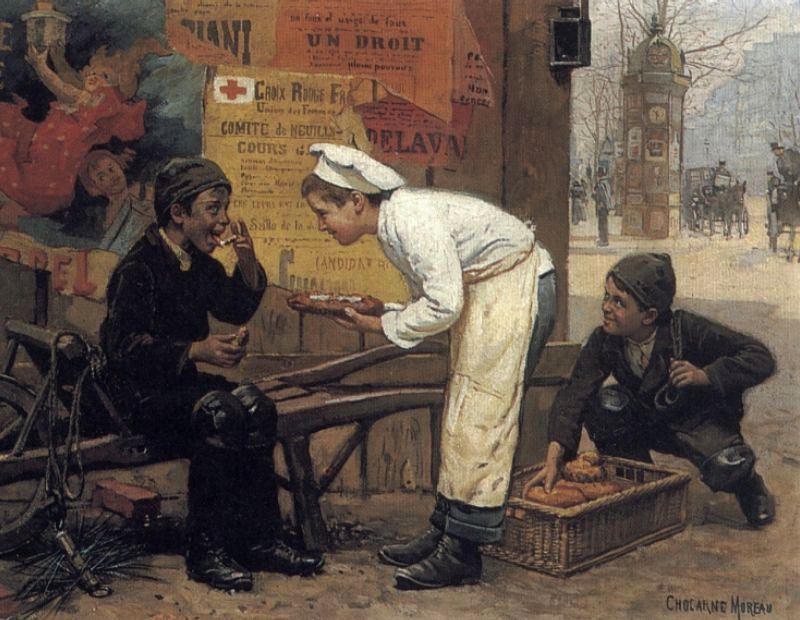
Theft By Failure To Make Required Disposition Of Property Received

The Cunning Thief,
Paul-Charles Chocarne-Moreau
(1855-1931) [Public Domain],
via Wikimedia Commons
The Union County Prosecutor filed charges against Joanne Williams on July 25, 2012. The investigation began during summer 2011 after an accountant allegedly identified irregularities in an elderly woman's financial records.

The grand jury charged Williams, a Linden resident, with theft, theft by failure to make required disposition of property received, and misapplication of entrusted property, according to news site mycentraljersey.com.

The 56-year-old defendant allegedly took at least $160,000.00 from an 88-year-old neighbor's life savings.

New Jersey law prohibits theft by failure to make required disposition of property received when a person purposely obtains or retains property upon agreement or subject to a known legal obligation to make specified payment or other disposition, whether from such property or its proceeds or from his own property to be reserved in equivalent amount, if he deals with the property obtained as his own and fails to make the required payment or disposition.

Under N.J.S.A. 2C:20-9, one may have committed this crime even if it is impossible to identify particular property as belonging to the victim at the time of the failure to make the required payment or disposition.

Experienced New Jersey Criminal Defense Lawyer Michael Smolensky, Esquire, knows how to protect his clients. Mr. Smolensky can provide consultations on any case regarding theft. Call Now—(856) 812-0321.

Privilege Against Self-Incrimination

Silence by Johann Heinrich Füssli
(1741 - 1825) [Public domain],
via Wikimedia Commons
Police arrested Tiffany Carpenter, who allegedly confessed to beating her aunt with a pipe wrench, according to courierpostonline.com.

Before a confession may be used, the State must prove the police informed the individual of her rights, and that s‎he knowingly, voluntarily, and intelligently waived them‎.

These warnings negate perceptions related to psychological stress in police-controlled circumstances that might compel a person to ‎speak where she would not have spoken otherwise.

New Jersey law is broader than federal law.

  • BURDERN OF PROOF: New Jersey law requires the Prosecutor to prove waiver beyond a reasonable doubt. Federal law only requires proof or waiver by a preponderance of the evidence.
  • KNOWING CONFESSIONS: State law requires the police to inform suspects when there is already a criminal ‎complaint and arrest warrant. Federal law does not impose this notice requirement.
  • ANALYTICAL FRAMEWORK: New Jersey courts consider waiver based on the totality of circumstances. Federal courts apply a bright line rule.
Jurists and scholars may fairly characterize this distinction between New Jersey and Federal law as "Horizontal Federalism" within the context of New Judicial Federalism. New Jersey courts, however, march in lockstep with federal courts as to standing.

Experienced New Jersey Criminal Defense Lawyer Michael Smolensky, Esquire, knows how to protect his clients. Mr. Smolensky can provide consultations on all cases regarding the privilege against self-incrimination.

Call Now—(856) 812-0321.

Click "New Judicial Federalism," labeled in the post footer, for more examples and explanations about this topic.